Watering a New Tree Through Its First Kansas Summer
A new tree's first summer is decided at the hose, not at the nursery.
September 23, 2026 · 4 min read
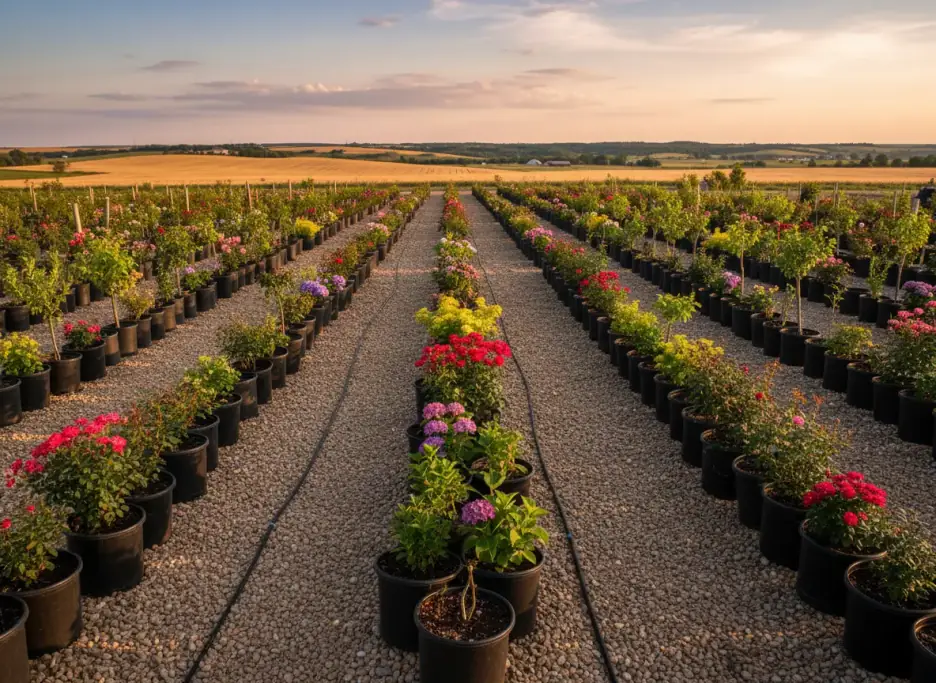
The single biggest cause of a newly planted tree failing in its first year isn't disease or a bad planting spot, it's inconsistent watering. A tree that's been in the ground a few months hasn't rebuilt the root system it lost when it was dug and moved, and it can't yet pull enough moisture from a wide area of soil the way an established tree can. Through a Kansas summer, that gap between what the tree needs and what its roots can reach is wide, and wind makes it worse by pulling moisture out of leaves faster than usual.
Deep and infrequent beats shallow and frequent
A quick daily sprinkle wets only the top inch or two of soil and trains roots to stay shallow, right where the ground heats up and dries out fastest. What a new tree actually needs is a slow, deep soak that reaches well down into the root ball and the soil just beyond it, done less often. For most newly planted trees, that means a deep watering every few days during hot, dry stretches rather than a light watering every single day.
How to actually deliver a deep soak
A slow trickle from a hose set at the base of the trunk for twenty to thirty minutes does more good than a fast blast of water that runs off before it soaks in. A soaker hose coiled around the root zone, or a five-gallon bucket with a few small holes drilled near the bottom set next to the trunk and refilled, both work well because they let water sink in slowly instead of sheeting off compacted soil. The goal is moisture reaching several inches down across the whole root ball and a bit beyond it, not just a puddle on the surface.
Reading the soil instead of the calendar
Weather changes week to week, so a fixed schedule will eventually be wrong in one direction or the other. Push a finger or a screwdriver a few inches into the soil near the root ball before you water. If it's still damp down at that depth, hold off a day or two. If it's dry, it's time to water regardless of what day of the week it is. During the hottest, windiest stretches of a Kansas summer, that might mean checking every other day; during a cooler, wetter spell, it might stretch to once a week or less.
- Water deeply and less often, not lightly and every day
- A slow soak for twenty to thirty minutes beats a fast blast that runs off
- Check soil moisture a few inches down before deciding to water
- Increase frequency during the hottest, windiest weeks; ease off after real rain
- Keep mulch in place to slow evaporation between waterings
- Watch for wilting, scorched leaf edges, or early leaf drop as signs of drought stress
Signs the tree is telling you something
Wilting leaves in the heat of the afternoon that perk back up by evening are usually normal and not a sign of a problem. Leaves that stay wilted into the cooler morning hours, edges that turn brown and crisp, or leaves dropping well before fall are all signs of drought stress that call for more consistent watering. On the other side, yellowing leaves and a soggy smell at the base can mean too much water sitting around the roots, especially in heavier clay soil that drains slowly. The first summer is really about paying attention rather than following a rigid rulebook.
Mulch does part of the job for you
A ring of mulch two to three inches deep over the root zone slows how fast the sun and wind pull moisture out of the soil between waterings, which matters more in a Kansas summer than in most other climates. It also keeps the soil surface a little cooler, which reduces stress on the fine feeder roots sitting closest to the top of the ground. Keep the mulch pulled a few inches back from the trunk itself so it isn't holding constant moisture against the bark, and refresh it as it breaks down or blows around, since a thin, patchy layer doesn't do much good.
It's worth resisting the urge to fertilize a stressed, newly planted tree in the middle of summer. A tree that's already working hard to establish roots and cope with heat doesn't benefit from being pushed to grow more top growth at the same time, and fertilizer applied to dry soil can actually burn roots that are already under strain. Watering consistently through the summer matters far more than feeding does in year one.
The first year matters, but don't stop there
A lot of the advice around new trees focuses entirely on the first few months, but a tree's root system in south central Kansas often takes two full growing seasons, sometimes longer for a larger balled and burlapped specimen, to establish enough to handle a normal summer on rainfall alone. Keep an eye on watering needs into the second summer as well, tapering off gradually rather than assuming the tree is fully on its own the moment it survives one winter.
If you're not sure how a particular tree handles its first summer here, call Pratt Tree Farm at (620) 672-7134 and ask what's ready in the rows this season.
Pratt Tree Farm, (620) 672-7134
Call (620) 672-7134More articles
Picking a Shade Tree That Can Handle Pratt County Wind and Heat
The right shade tree for a Pratt County yard has to survive the wind first and look good second.
Planting a Balled and Burlapped Tree the Right Way
Most tree failures trace back to planting day, not the years after it.