Picking a Shade Tree That Can Handle Pratt County Wind and Heat
The right shade tree for a Pratt County yard has to survive the wind first and look good second.
September 23, 2026 · 3 min read
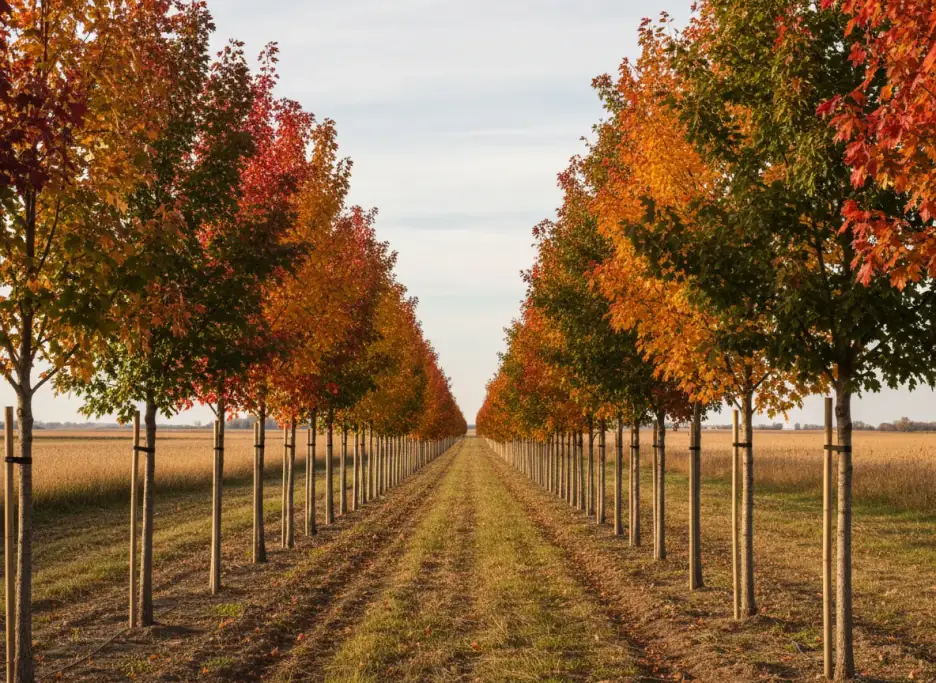
A shade tree in south central Kansas lives a harder life than the same tree would in a sheltered eastern city. Wind here is not occasional, it is a daily condition, and it comes with summer heat that can sit in the high nineties for weeks at a stretch. Before you fall in love with a shape or a fall color, it helps to think about what the tree has to survive before it ever gets to look nice.
Wind is the first filter, not an afterthought
A lot of shade trees that thrive in catalog photos struggle the moment they hit open plains wind. Brittle-wooded trees drop limbs in every storm, and trees with a shallow, spreading root system can lean or heave after a few wet, windy years. Species with a naturally strong central leader and deep taproot tendencies hold up better over decades than trees bred mainly for fast growth. Fast growth and strong wood are usually a trade-off, and on a windy lot the trade-off matters more than the calendar.
Bur oak is a classic example of a tree built for this kind of weather. It grows slower than a lot of alternatives, but its wood is tough, its root system runs deep, and mature bur oaks across Kansas towns have outlived the people who planted them. Kentucky coffeetree and hackberry are two other options worth asking about for the same reason: both are tolerant of wind, tolerant of a range of soils, and not prone to the kind of storm damage that turns a shade tree into a liability.
Heat and drought stress change the math too
Kansas summers put trees under real drought stress even in years with decent spring rain, because heat and wind both pull moisture out of leaves faster than a tree can replace it through its roots. A tree that is only marginally heat tolerant will show it: scorched leaf edges by August, early leaf drop, thin canopies in years three through five when the root system still isn't established enough to keep up. Species that handle heat and short dry spells without dropping their canopy are worth prioritizing over trees chosen purely for quick shade.
Lacebark elm is one option that tends to handle heat and wind reasonably well while still growing at a manageable pace, and it has cleaner disease resistance than older American elm plantings did. None of this means every yard needs the same tree. Lot size, how close the tree will sit to a house or driveway, and what's already growing nearby all change which species makes sense.
What Pratt County clay and sandy soils ask of a tree
Soil around Pratt varies from heavier clay to sandier ground depending on where you are, and that matters for both drainage and how deep roots can establish. Heavy clay holds water longer after a rain, which can suffocate roots that need better drainage, while sandy stretches drain fast and dry out a young tree's root zone quickly in summer. A tree that's flexible across soil types gives you more margin for error, especially in the first two or three years while the root system is still finding its footing.
- Bur oak: slow but tough, deep-rooted, long-lived, tolerant of wind and a range of soils
- Hackberry: wind tolerant, adaptable to clay or sandy ground, tough once established
- Kentucky coffeetree: strong wood, drought tolerant once mature, distinctive winter silhouette
- Lacebark elm: reasonably fast, heat tolerant, cleaner disease profile than older elms
Match the tree to the spot, not just the species
Even the toughest species can struggle in the wrong spot. A tree planted too close to a foundation, under power lines, or in a low spot that holds standing water after every storm is fighting its site on top of fighting the climate. Walk your yard at different times of day and notice where the wind funnels hardest, where water pools, and where a mature canopy will actually have room to spread without crowding a structure or another tree.
None of this has to be guesswork you do alone. Call Pratt Tree Farm at (620) 672-7134 and ask what's ready in the rows this season for a wind-tolerant shade tree suited to your lot.
Pratt Tree Farm, (620) 672-7134
Call (620) 672-7134