Spring or Fall: When to Plant Trees in South Central Kansas
Both seasons can work here. The right one depends on the tree and the summer ahead of it.
September 23, 2026 · 3 min read
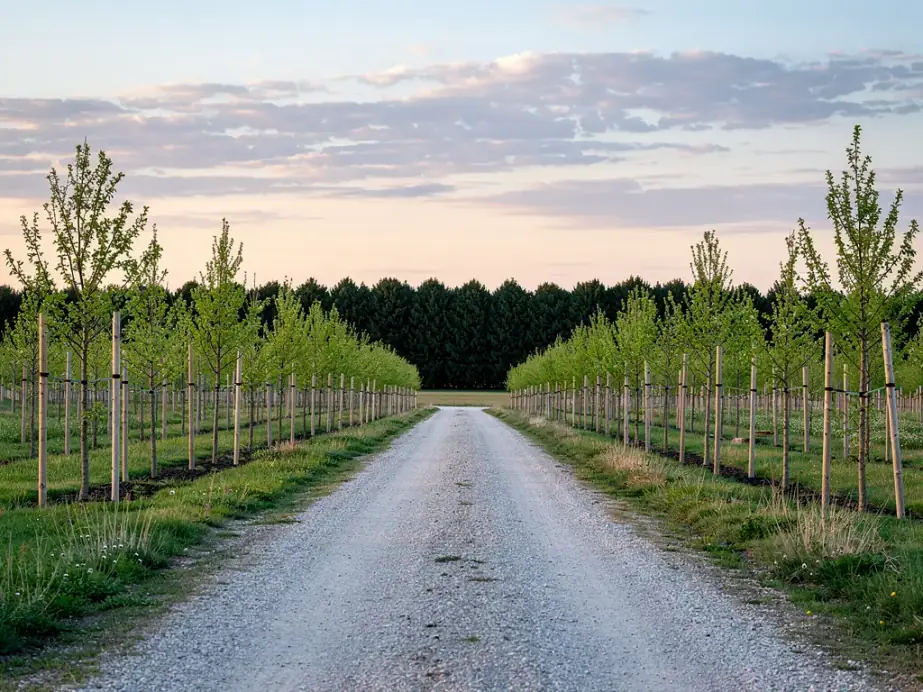
One of the most common questions around planting a new tree isn't which species to choose, it's when to put it in the ground. In south central Kansas, both spring and fall can work well, and the honest answer is that the better season depends on the tree, the site, and how much attention the tree will get through its first stretch of weather.
The case for fall planting
Fall planting gives a tree's roots a long stretch of cooler, milder weather to start establishing before the stress of a Kansas summer arrives. Soil stays warm enough for root growth well after the air has cooled down, so a tree planted in fall can spend months quietly building roots without having to support a full canopy of new growth at the same time, since it's headed into dormancy rather than a growth spurt. By the time the following summer's heat and wind show up, a fall-planted tree often has a head start on root establishment compared to one planted the same spring.
The case for spring planting
Spring has its own advantages, particularly for species that are more sensitive to winter cold while young, or for a planting where you want to be able to watch the tree closely through its first season rather than through a winter when problems are harder to spot. Spring planting also means an entire growing season of active root and top growth before the first winter tests the tree, which matters for species less tolerant of an unestablished root system going into freezing temperatures.
What actually tips the decision
For most common shade trees and evergreens suited to this area, fall planting is often the stronger default because it front-loads root establishment before the hardest season, summer, rather than asking a brand new root system to fight both heat stress and root growth at the same time. That said, timing within the season matters as much as the season itself. A tree planted too late in fall, right before hard freezes set in, hasn't had enough time to establish before winter locks the ground up, and a tree planted too late in spring is heading straight into summer heat with barely any root development behind it.
- Fall planting: cooler air, warm soil, months of root growth before summer heat arrives
- Spring planting: a full growing season to watch and adjust before the first winter
- Aim for early-to-mid fall or early-to-mid spring rather than the edges of either season
- Watering discipline matters just as much regardless of which season you choose
- Ask about a specific species before assuming one season is automatically better
Either way, the first few months decide the outcome
Whichever season you plant in, the real work happens in the weeks right after, not on planting day itself. Consistent watering, correct planting depth, and mulch that protects the root zone matter more to a tree's long-term survival than whether it went in the ground in April or October. Choosing the right season just stacks the odds a little further in the tree's favor before that work even starts.
Fall planting still needs winter watering
One thing that catches people off guard with fall planting is that the watering job doesn't end when the leaves drop or the weather turns cold. As long as the ground isn't frozen, roots are still doing quiet work underground, and a dry, windy Kansas winter with little snow cover can pull moisture out of the soil around a newly planted tree just as surely as a summer dry spell can. Checking soil moisture every few weeks through a mild, dry winter and watering when it's dry a few inches down is part of what makes fall planting pay off the way it's supposed to.
Bare-root, container, and B&B stock don't all follow the same clock
How a tree was grown and dug changes how forgiving the calendar is. A container-grown tree carries most of its root system with it regardless of season and tends to tolerate a wider planting window than a field-dug balled and burlapped tree, whose roots were more directly disturbed in the digging process and benefit more from landing in a mild stretch of weather rather than the harshest part of either season. If you're planting a larger B&B specimen, it's worth being a little more deliberate about timing than you might be with a smaller container tree.
If you want a straight answer for a specific tree and your specific piece of ground, call Pratt Tree Farm at (620) 672-7134 and ask what's ready in the rows this season.
Pratt Tree Farm, (620) 672-7134
Call (620) 672-7134More articles
Picking a Shade Tree That Can Handle Pratt County Wind and Heat
The right shade tree for a Pratt County yard has to survive the wind first and look good second.
Planting a Balled and Burlapped Tree the Right Way
Most tree failures trace back to planting day, not the years after it.