Evergreens for Windbreaks and Screens on the Kansas Plains
A good windbreak is a planned structure, not just a line of trees.
September 23, 2026 · 4 min read
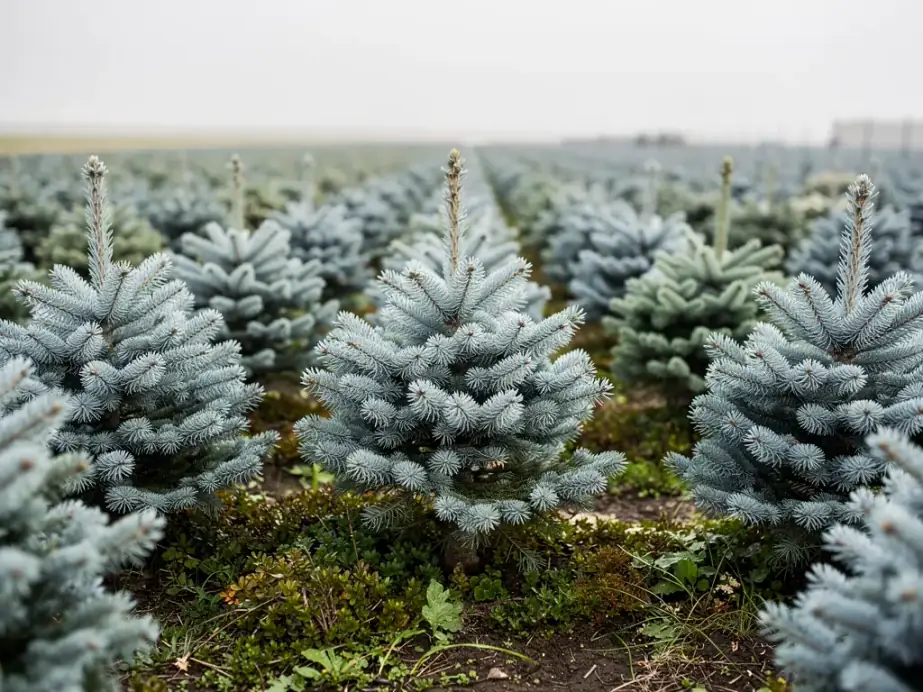
On open plains ground around Pratt, wind isn't something you plan around, it's something you plant against. A windbreak or a screen of evergreens does real, practical work: it slows wind across a yard or field, cuts heating and cooling costs by blocking cold winter wind off a house, catches blowing snow before it drifts across a driveway, and gives a rural property some visual privacy where there's otherwise nothing to block a sightline for a mile.
Why evergreens do the job year-round
A deciduous tree loses its leaves right when Kansas wind is often at its worst, in the late fall and winter. Evergreens keep their needles through those months, which is exactly why they're the backbone of most windbreak and screen plantings on the plains. Eastern redcedar and various pines, including ponderosa and ones like Austrian pine, show up again and again in Kansas windbreak plantings because they tolerate wind, hold up in a range of soils, and stay dense enough to actually block wind and sightlines rather than just standing there as a row of trunks.
Thinking in rows, not a single line
A single row of evergreens does some work, but a multi-row windbreak does noticeably more, because it gives wind more layers to push through and gives the whole planting more resilience if one tree in a row is lost to storm damage or disease. A common approach on farms and rural properties is a shorter, denser shrub or small-tree row on the windward side, then one or more rows of taller evergreens behind it, sometimes with a row of a different, fast-growing species mixed in for early wind protection while the main evergreens mature.
Why mixing species matters more than it looks
A windbreak planted as a single species is efficient to plant but fragile over the long run. If a disease or pest problem ever moves through that one species, the entire windbreak can be hit at once, leaving gaps that take years to fill back in. Mixing two or three compatible evergreen species across the rows, or alternating evergreens with a hardy deciduous species in an outer row, spreads that risk out. It also tends to look less like a straight fence line and more like something that belongs on the property.
- Multiple rows do more than a single row, and recover better from losing one tree
- Eastern redcedar and pines like ponderosa are common Kansas windbreak choices for their wind tolerance
- Mixing species spreads the risk of disease or pest damage across the planting
- A denser shrub or small-tree row on the windward side adds an early layer of protection
- Give rows enough room between them for each tree to fill out to its mature width
Give the planting room to mature
It's tempting to plant evergreens close together for a fuller look right away, but a windbreak planted too tight eventually competes with itself: trees crowd each other's root zones and canopies, growth slows, and the lower branches that do the most wind-blocking work can thin out from lack of light. Spacing that looks a little sparse in year one is usually the spacing that produces a dense, healthy windbreak by year ten. It's worth thinking in decades with a planting like this, since the whole point is a structure that's still doing its job long after it's planted.
A farm windbreak and a backyard screen are different jobs
A windbreak meant to protect a field, a driveway, or a livestock area from wind and drifting snow is usually planted in long, straight rows with enough length to actually intercept wind across the width of what it's protecting. A privacy screen closer to a house is a different problem: it's about blocking a specific sightline or softening a view at a shorter distance, so the planting can curve with the yard, mix in some flowering or deciduous shrubs at eye level, and doesn't need to run in perfectly straight agricultural rows. Both jobs lean on the same core evergreens, redcedar and pines, but the layout and spacing decisions look different depending on which one you're actually solving for.
Austrian pine is sometimes used in Kansas windbreak plantings alongside ponderosa, though it has shown more susceptibility to certain disease pressures in parts of the state over the past couple of decades than it once did, so it's worth asking specifically about current recommendations for this area before leaning on it as a primary species rather than a secondary one mixed into a row.
Snow catch and wildlife are worth factoring in
A dense evergreen windbreak does more than block wind at ground level. It also catches blowing snow before it reaches a driveway or a farm lane, dropping it in the windbreak itself rather than in a drift you have to plow through. Over time, an established windbreak also tends to draw in birds and other wildlife looking for cover, which a lot of rural landowners consider a bonus rather than a downside, especially when the planting includes a mix of evergreen and berry-producing shrub species along its edges.
For a layout and species mix suited to your specific stretch of ground, call Pratt Tree Farm at (620) 672-7134 and ask what's ready in the rows this season.
Pratt Tree Farm, (620) 672-7134
Call (620) 672-7134More articles
Picking a Shade Tree That Can Handle Pratt County Wind and Heat
The right shade tree for a Pratt County yard has to survive the wind first and look good second.
Planting a Balled and Burlapped Tree the Right Way
Most tree failures trace back to planting day, not the years after it.